Design intersektional unter die Lupe nehmen. Gestaltung als Komplize von Diskriminierung und als widerständiges Werkzeug
Studienhefte Problemorientiertes Design | Heft #12
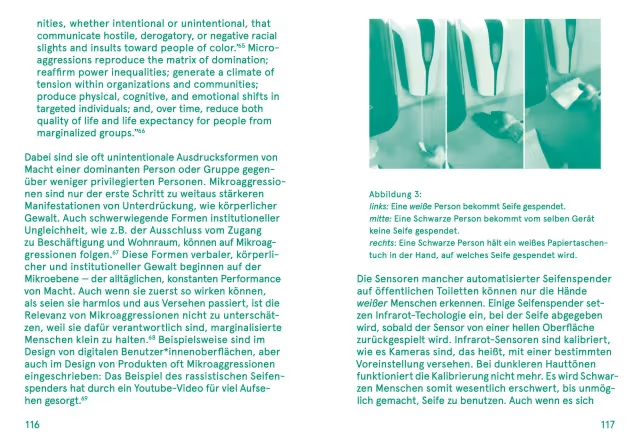
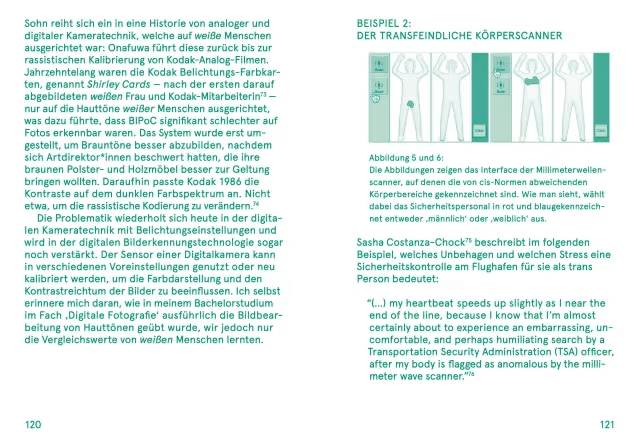
What do the designs of airport full-body scanners, crash-test dummies, and automatic soap dispensers have in common? These objects appear neutral and universal, but they (re)produce gender-binary, sexist, and racist exclusions. In this way, design repeatedly—consciously or unconsciously—becomes an accomplice in processes of discrimination.
To understand one’s own positionality as a designer and to critically examine one’s own conception of design, an intersectional understanding of power—based on the theories of Black feminism from the 1980s and 1990s—is indispensable. Kimberlé Crenshaw’s concept of intersectionality emerged at the intersection of “race/class/gender” to shed light on the complex experiences of discrimination faced by Black women and to create a framework for analyzing multiple forms of discrimination.
This book provides an overview of where and by whom design and intersectionality are already being considered and practiced together. It introduces alternative design practices, techniques, and collectives—such as Respectful Design and Design Justice—that reinterpret design as an emancipatory tool.
Through practice-oriented interviews with designers who adopt an intersectional feminist approach, this study examines the various forms that “designing otherwise” can take.