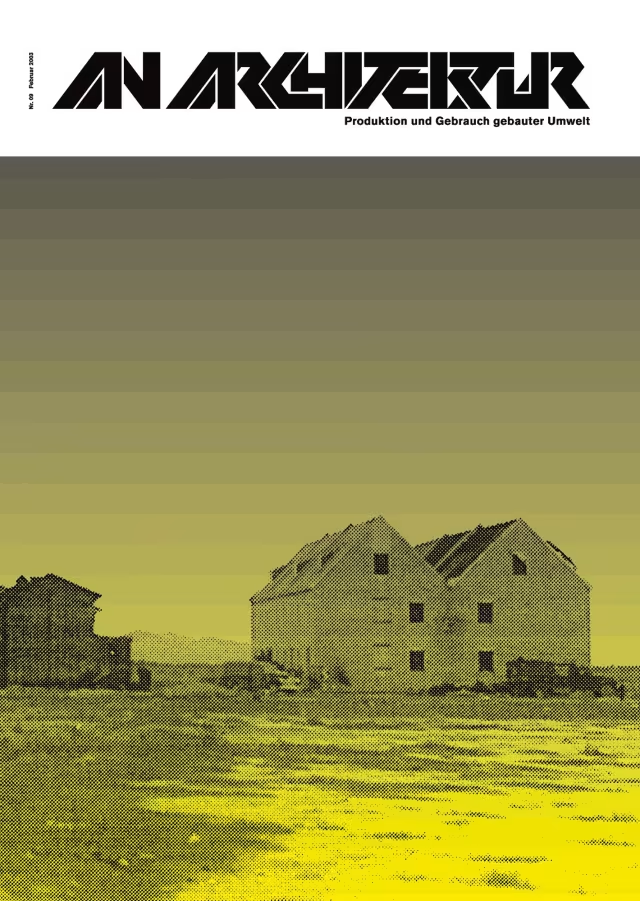
An Architektur 4–9
Krieg und die Produktion von Raum
An Architektur 4
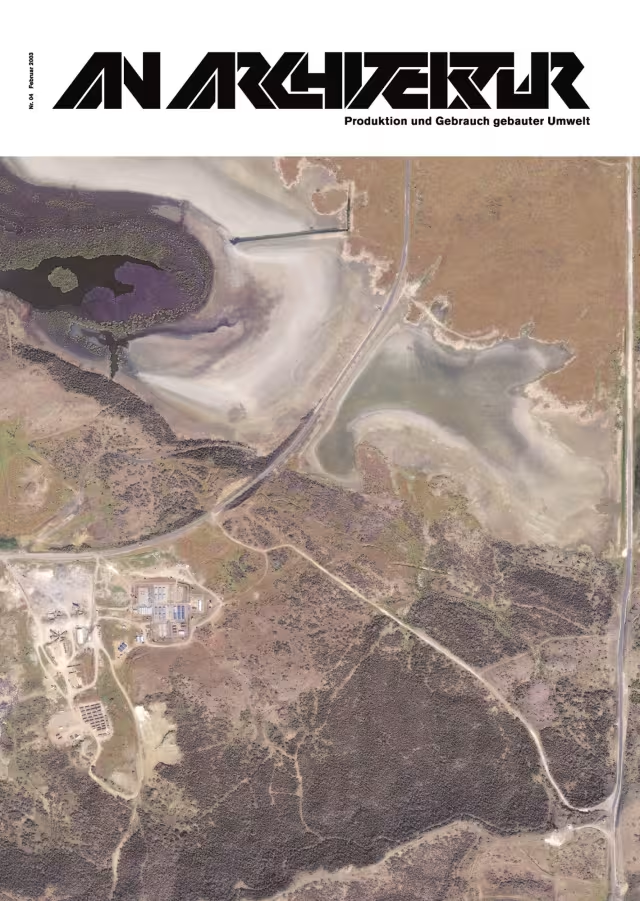
US Naval Base Guantánamo Bay: Law and Space
Guantánamo Bay is unique in a certain sense. Due to its specific role within the legal order, it represents a special case in the categorization of spaces. There is currently an important debate within the U.S. legal system concerning which constitutional rights apply to individuals accused of terrorism and detained on a military base — a territory subject to U.S. jurisdiction where constitutional rights nonetheless do not apply. "Guantánamo is, in a way, an extreme example of such an extraterritorial territory. It is not even located within U.S. national territory, although it remains under U.S. control.”
—Peter Marcuse
Including maps, contributions by Judith Butler and the Lawyers Committee for Human Rights, and an interview with Kenneth Hurwitz.
An Architektur 5
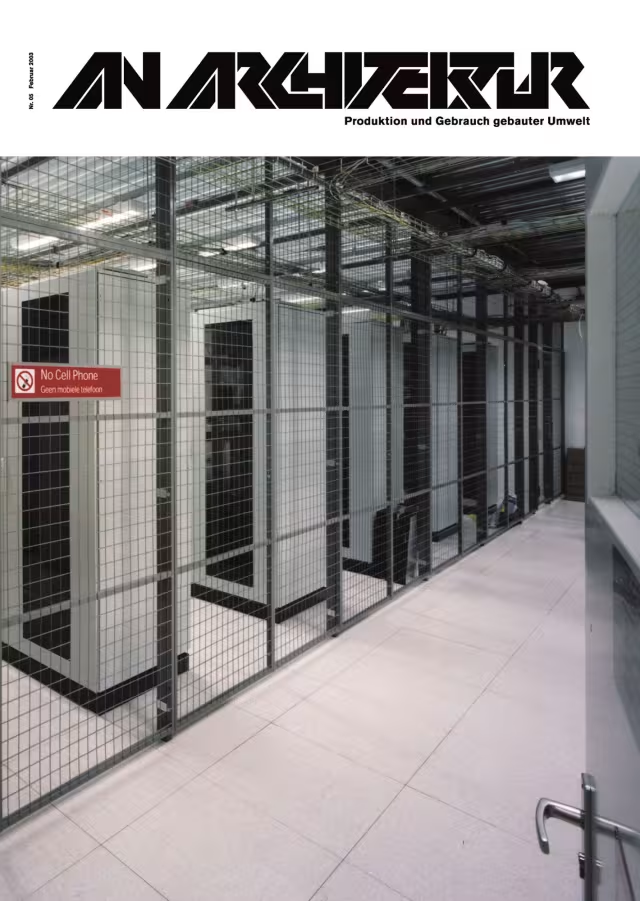
Mission Critical Facility
In recent years, companies in the telecommunications and finance sectors have spatially separated their data storage and processing infrastructures from office workplaces and outsourced them into so-called “Mission Critical Facilities.” These are inconspicuous buildings designed for data storage whose security and infrastructure systems are intended to ensure business continuity even in the event of fire, natural disasters, or terrorist attacks.
Within this new building typology, architectural planning is largely reduced to the minimization of security risks.
With photographs by Jannes Linders and a text excerpt by Martin Pawley.
An Architektur 6
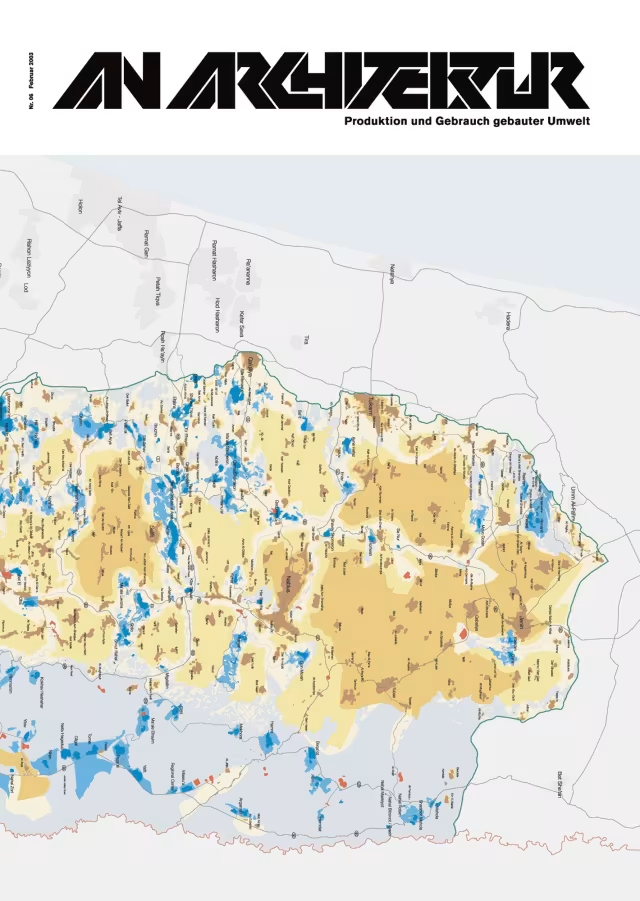
Segal/Weizman: Israeli Settlement Policy
Previous maps of the West Bank generally represent Israeli settlements as points indicating location and, at most, population size. The map created by Rafi Segal and Eyal Weizman in cooperation with the human rights organization B’Tselem instead reveals the form and territorial extent of the settlements.
Many settlements are strategically organized to enable the surveillance of Palestinian cities or the disruption of Palestinian infrastructure. The analyses seek to demonstrate connections between planning and construction processes and violations of human rights.
Including an interview with Eyal Weizman.
An Architektur 7
Architects for Peace, 1983
“We call upon all colleagues to oppose the construction of nuclear shelters and to reject planning projects that contribute to further militarization. Furthermore, we urge all architects to inform and educate the public about the function, purpose, and war-promoting implications of nuclear bunkers. We call for solidarity among critical architects, which alone can transform individual powerlessness into political pressure on governments.”
Including reprints of the original campaign documents and interviews with protagonists of the time such as Norbert Beier-Xanke, Walter J. M. Bunsmann, and Volkwin Marg.
An Architektur 8
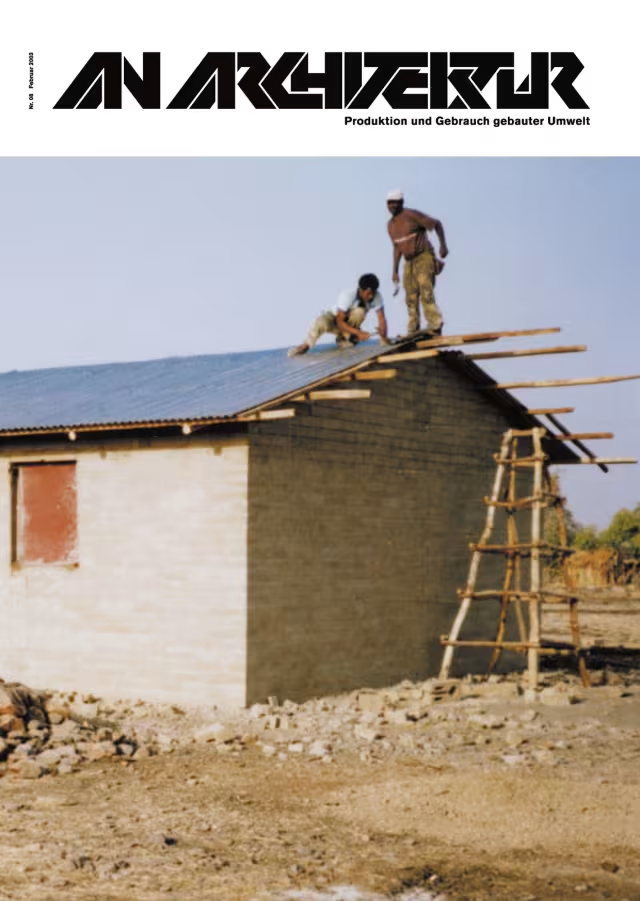
Danscha: Settlement for Demobilized Guerrilla Fighters
Beginning in 1994, with German support, a settlement for demobilized guerrilla fighters of the Tigrayan Liberation Front was constructed in the scarcely developed lowlands of northern Ethiopia near the borders with Sudan and Eritrea. The project’s strategic location, planning and administrative structures, and everyday life in Danscha reveal its military background.
Including thematic maps and interviews with project participants.
An Architektur 9
German-Japanese Village, Utah 1943
In 1943, detailed reconstructions of typical German and Japanese residential buildings were erected at the Dugway Proving Ground military site in Utah. The purpose of these structures was the development and testing of incendiary bombs for Allied air raids.
The complex known as the “German-Japanese Village,” developed with the participation of émigré German-Jewish architects Erich Mendelsohn and Konrad Wachsmann, as well as Czech architect Antonin Raymond, was preceded by extensive studies of urban structures, construction methods, material properties, and the furnishing of typical buildings.
Including reprints of historical documents.